Showing posts with label Clinton Anderson. Show all posts

Tuesday, December 18, 2012

Treats or no treats


Training Tip of the Week: Treats should be a surprise for your horse

By Clinton Anderson18. December 2012 00:05

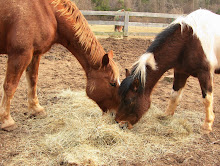
I often get asked if feeding treats will cause a horse to become pushy or to bite. The answer is it depends. Feeding your horse treats won’t teach him to be mouthy as long as you give him treats correctly. Never give your horse a treat if he’s looking for it. When I give my horses a treat, I want it to be a surprise. I don’t use treats to bribe the horse or win his affection. Treats are just a bonus for a job well-done. A treat should always be a surprise. If you constantly feed your horse treats, he’ll be looking for them, and that’s when he’ll start mouthing your shirt, pockets and hands. When you give your horse treats, feed him one at a time, and only give them when he’s not expecting it. If he is looking for a treat, he doesn’t get one


People ask me all the time why I don't give more treats. Clinton says it perfectly here. I want them to know that when they get a treat they did something really well.  Just like with a child.

Loretta
clear communication
visible results


Tuesday, February 14, 2012

The Importance of Backing (on the ground)

One of the first skills I learned when studying natural horsemanship was how to back up the horse-away from me on the ground.  When I need to correct a horse for rude or bad behavior I get him to back up.  To teach a horse to stand still at a mounting block, I get him to back up when or if, he moves away.  It will even work to teach a horse not to be mouthy with their tack on a fence.  (Tansey, watch out!)


From Clinton Anderson:


Backing up is very unnatural for a horse to do. Think about the number of times you’ve seen a horse backing up across the pasture. It’s rare, isn’t it? Other than taking a few steps backwards to warn the horses next to him to get out of his space, most horses don’t practice backing up on their own. They’re addicted to forward movement. That’s why teaching them to back up on the ground and under saddle is one of the best things you can do. Teaching a horse to back away from you on the ground reinforces to him that he needs to stay out of your personal hula hoop space and respect you. Backing from under saddle teaches the horse not to run through your hands and respect your cues while laying a foundation for more advanced maneuvers. To put it plain and simple, a good backup is the foundation for everything you do with your horse - stopping, collection and being able to rate the horse’s speed, to name just a few.


Loretta
 the natural horseman
 clear communication/visible results
Enhanced by Zemanta

Wednesday, January 5, 2011

Trail Training

When you’re out on the trail, don’t just put your horse on auto-pilot and gab away with friends; use the opportunity to train him. Practice softening and suppling his five body parts by bending him around bushes, practicing serpentines in and out of trees, etc. The more you make the horse move his feet forwards, backwards, left and right, the more he’ll concentrate on you instead of finding something to spook at on the trail.


Loretta
 the natural horseman

 clear communication/visible results