Showing posts with label Trail riding. Show all posts

Friday, February 22, 2013

Trail Safety


Trail Riding 101 and Trail Riding Etiquette


Following basic trail etiquette can help ensure the safety of you, your horse, others who ride with you and folks you meet on the trail. Following basic trail etiquette is important to keep trails open to horses. Many trails are closed to horses because of riders who abused the trail riding privilege. Remember that you are always an ambassador of horseback riding.  If non-riders meet a courteous and polite horse person on the trail, their impression of all of horse folks will hopefully remain positive.
  1. When encountering hikers and bikers
    • Ideally hikers and bikers will yield to a rider.
    • When encountering hikers or bikers, talk to them and get them to talk to you. Hikers with backpacks and bikers with helmets do not look human. Explain this to them and ask them to speak so that your horse will understand that this “thing” is actually just a person.
    • Ask them to stand off on the downhill side of the trail. Once again, horses are prey animals and often attacked from above, so keep the scary looking thing down low. It can also be easier to control a horse going uphill if he spooks.
    • Stay relaxed yourself and keep talking to the hiker and your horse if he is nervous.
    • Find out if there are more in their party and tell them how many in your party.
    • Thank them for their cooperation and be kind and courteous. We are all out there to enjoy ourselves.
  2. When encountering other horses
    •  In theory, single riders will yield to pack strings. But be prepared for this not to be the case.  In generally yield to anyone coming up or down the trail if you can because you know your animals and your riding ability.
    • Ideally, downhill riders will yield to uphill riders.
    • Do not try to squeeze by other horses, you are asking for all kinds of trouble. Instead, give yourself plenty of room to go around. You don’t know their animals or their riding ability. So take the safer route and yield.
    • If the trail is narrow with no way to move off to let another pass, decide who should turn around to travel back to a safe place to pass. Always turn your horse to the down hill side. He can see his front feet and won’t step off the trail. He cannot see his back feet or where he is putting them as well, so you want to keep those on the trail. Unless you know the oncoming horse and rider and their abilities, it is safest to assume that the horse and rider are both inexperienced and be prepared that anything could happen as you or they go by.
  3. You want to maintain a distance of about one horse length between horses while trail riding. This leaves you time and space to react safely in the event of an accident in front of you.
  4. When you encounter obstacles on the trail, such as bridges, water crossings, narrow passes, poor footing areas, etc. walk the horses across one at a time. Allow more than the usual single horse length between each horse over longer bridges.
  5. Watch the footing, especially on uphill and downhill grades. Gravel on rocks is like ice. Wet bridges and wet asphalt can also be very slippery. If you encounter problems, warn any riders behind you.
  6. When leading and/or riding with anyone behind you
    • Always start rides at a Walk
    • Ask before changing gates, trotting, loping, canter, etc.  This really should be discussed before the trail ride begins.  You may have riders in the pack string with various levels of expertise, including beginners who are not used to changing gates.
    • Warn of holes, bad footing and other dangers
    • Warn when you are stopping
    • Warn if a branch might snap back in someone’s face
  7. For your safety and the safety of others around you, pay attention to your horse and keep your horse under control. Keep a peripheral eye on the rest of the horses and the environment around you. Being prepared for anything to happen can often prevent a bad wreck. Think like a horse, especially if you are the leader of the group. If you look at objects on the trail like a prey animal (is it unfamiliar or potentially dangerous), you can help prepare yourself for anything. Once again preparation and awareness can be the difference between a controlled flight and a bad wreck.
  8. Nasty horses in the back. If your horse is unruly, you should bring up the rear where his poor behavior will not be witnessed by the other horses and cause them to get upset as well. And, if you are lucky, your horse may learn a thing or two from watching calmer horses in front of him all day.
  9. Tie a red ribbon in the tail of a horse that kicks. If you are following a horse with a red ribbon, obviously it would be safer to maintain a little more distance between you, but also you might be extra watchful for signs of forewarning: pinned ears, swishing tail, hind leg at the ready, etc. Remember that your horse could move to avoid the kick and put you in its path instead. A broken leg or knee from a kick 10 steep miles from the trailer is no fun.
  10. Mares in season and stallions can present special problems on the trail. They require an extra level of attention on the part of the rider and the others in the group. If you are riding one, be extra vigilant of the horse's behavior. If you are not, but they are part of your group, keep an extra eye out on these animals. Ideally the rider on either of these animals would be an experienced horse person. Warn oncoming riders if necessary. And then also consider that any horse you may pass on the trail could be a mare in season or a stallion and that the rider may not be experienced.
  11. Keep track of other riders behind you Take turns leading, (share the dust).
  12. When you reach a watering area, take turns and don’t crowd. Wait for everyone to finish before moving off. And remember your Leave No Trace ethics: do not destroy the water front by trying to water all the horses at the same time. Use only the obvious area where animals come down to drink.
  13. Stop if there is a wreck. This should be obvious. Your help may be needed. But also, once again, horses are herd animals and do not like to be left alone, especially in an unfamiliar area. If you ride off, while someone is trying to mount back up, their horse could panic and take off to catch up with the group.
  14. Always practice Leave No Trace ethics:
    • Don’t cut switchbacks.
    • Do not to walk through soft, wet ground. Horses’ hooves are sharp and destroy vegetation.
    • Pick up all your trash, including cigarette butts, and pack it out.
    • Pick up other people’s trash to keep places as pristine as possible and set a good example.
    • Be respectful of property owner's wishes.  Stay on the marked trail. 
  15. Personal Safety
    • Always carry ID on your person and on your horse in case you become separated.
    • Tell someone where you are going in case you don’t come home, even when riding with a group.
    • Carry basic survival gear on your horse and at least the bare minimum on your person:
      • cell phone
      • matches
      • food
      • water
Other Resources for Trail Riding info:
The Seven Principles of  "Leave No TraceBehind:
  1. Plan Ahead and Prepare
  2. Travel and Camp on Durable Surfaces
  3. Dispose of Waste Properly
  4. Leave What You Find
  5. Minimize Campfire Impacts
  6. Respect Wildlife
  7. Be Considerate of Other Visitors
For more information and details on "Leave No Trace"
visit the Leave No Trace website at
 
www.lnt.org


Thank you to the Nokesville Horse Society who posted this on their website.

www.nhsinc.tripod.com


Loretta the natural horseman clear communication/visible results

Tuesday, February 7, 2012

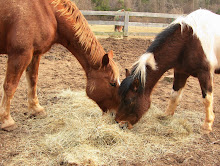
Why we shouldn't let our horse nibble when on lead


VERY GOOD ADVICE


    "Do not let your horse
     eat while on the lead line."

  That's it.

  Why is it such a big deal?

  Believe it or not, it leads to dangers
  in the saddle for you.

  It begins back at the lead rope.

  If you let him eat when you have him on
  the lead rope, he'll want to eat...

  "Whenever he's with you!"

  So what?

  Well...if you're riding and he stops
  to grab a mouth full of grub, it's a pain in
  the butt.

  Worst of all, it's a major sign of disrespect.  Disrespect translates into,
  "I ain't gonna listen to you."

  And when your horse won't listen to
  you...especially when you need him most (like when
  he spooks and wants to take off like an out-of-control
  tornado)...you're in for a scary, dangerous ride.

  Why?

  Cuz he's gonna do what he's gonna do
  and what you say likely won't matter.
 
  It's not just the eating - it's the
  lack of respect in lots of things that
  gets you in trouble.

  So I ask you...do you still wanna let
  your horse eat while he's on your lead rope?

  Check out more of what Brad reveals - you'll
  be glad you did.  Go to:

 
  Brad is one of our most-favored trainers
  for a very good reason.  You'll see why.


Those of you  who know me will know I recently dealt with this very issue with my Appy mare, Gemstone.  She was eating grass, pulling reins from my daughter's hands on route to a trail ride.  The next thing you know, when I told Lauren to kick her to get her to move forward, Gem reared.  VERY BAD.  But that's all that happened.  She was able to get away with it and became completely disrespectful.  So, no more nibbling Gemmy.  She's been fine ever since, just can't let her take EVEN ONE bite.


Loretta
 the natural horseman
 clear communication/visible results
Enhanced by Zemanta

Wednesday, May 18, 2011

Current Newsletter

20/20 Horsemanship
In This Issue


Quick Links
Find us on Facebook

Visit our blog

Forward to a Friend


Greetings!

Hello and welcome to our newest addition of the newsletter.  

Congratulations to Jensa for joining the NSHP!  

There will be a grand opening celebration in honor of the new arena.  Stay tuned for the details.

Welcome to new students Emmy and Angela!

Bring to class.....

A list of at least 3 things you did not know about horses, horsemanship or riding, before you started riding here.

I will post the lists in the next newsletter.  The person with the most items will receive a t-shirt.


Sincerely,
Loretta Arey
20/20 Horsemanship


Availability

Monday May 16 @5pm
Tuesday, May 17 @6pm
Wednesday, May 18 @ noon & 3pm


Arena Update

The new arena is coming along and should be completed within the next couple of days!  This is very exciting and I am thrilled to share this with my students.  


Summer Camp

I have extended the registration deadline for camp.  Please let me know if you are attending before June 1, 2011.  There are still openings each week, so register now!

July 11-15 10yrs and up  9am-2pm
July 18-22 5-7 yr olds      9am-1pm
July 25-29 8 & 9 yr olds   9am-1:30pm


Naturally Safe Horsemanship Program (NSHP)

The new programs are under way!  This is a wonderful opportunity for the more serious equestrian to enhance their skills. 

Important update:  ALL participants receive an additional 15 minutes of activity added to the end of their lesson. One way this time will be spent is to give the student the opportunity to assist in teaching the next student, thereby learning through teaching. 

Please schedule pick up accordingly.


Warmer weather is upon is!

The days have been quite lovely for all things horsey, finally!  We have long been waiting for this time.  Now that it is getting warmer, all riders need to allow for time to cool their horse (or pony) down after their lesson.  This means taking off their tack, brushing them and allowing them to move around while hand grazing.   This is PART OF GOOD HORSEMANSHIP.  Please allow for this extra time and schedule other activities accordingly.  If you do not have time at the end of your lesson to do this, then the last 10 minutes of your lesson will be spent cooling off your mount.   As a good trainer friend of mine says,
"If you don't have 15 minutes at the end of your lesson to properly thank your horse, then you don't have time to ride."

Note to parents:  I know everyone is busy, however this truly is an important aspect of your child's learning experience. Please see me if you have any questions or concerns.


A word about trail riding
Parents: This is for you


scottie and gem
With the nice weather here everyone wants to enjoy the time with their horse friends.  I have been able to take some of my advanced students out on the trails and they've enjoyed it immensely. 

Many people are asking when they too can go out on a trail, a very valid question!  Here's my philosophy:

My horses and ponies are not automatic trail animals.  They have to be ridden.  Period.  Piero, for example, is a VERY safe pony.  However, ponies can be unpredictable.  I need to know that you or your child can handle yourself properly in case of an emergency on the trail.   An emergency being if the horse or pony spooks, jumps sideways, suddenly stops and spins, or the worst, runs off.  In the case of a run away, you need physical strength to perform the emergency one rein stop that I teach everyone.  An 8 year old child is not capable of that.  Period.    In order to automatically do the right thing in this situation you cannot take the time to think about it.  Your body just has to perform the moves without thought, an automatic response.

So, how do I know if you are ready?

Here are some things I look for:
  • Can you ride at a walk around the arena while standing?
  • Can you walk around the arena by yourself, halt, and walk again, off lead?
  • Are you trotting yet?
  • Are you trotting off lead line?
  • Can you post to the trot without losing balance?
A student not yet proficient at trotting is not safe on the trail.  Please understand, it is a BIG, wide open space.  You need to be comfortable because often the horse will attempt to trot home and you need to be able to control his speed.  I teach only one child capable of trail riding and she's been riding for 6 years.  She spent the first 3 on a lunge line developing her seat.  I am not being a prude about this.  I am protecting your children.  This is a dangerous activity and it is my job to eliminate unnecessary risks. 

Are there places that allow children to trail ride?  Sure there are.  There are also places that teach trotting before they have control, cantering before they can trot correctly, and jumping before they have a good seat at the canter. These same people do not know what it is when a horse cocks their leg or licks and chews. They do not know how to properly catch a horse or say hello.   You will not find that here.  I am proud to offer horsemanship skills and will teach everyone how to be a safe trail rider, when they are ready, in their own time.


Loretta
 the natural horseman
clear communication/visible results
Enhanced by Zemanta

Saturday, April 16, 2011

Spring and summer help


Working Students and Interns
spring and summer help

Within the next month I am offering this opportunity for a few working students and interns.  Duties include but are not limited to:


grooming
helping prepare for beginner lessons
feeding
exercising
daily handling and ground training
mucking
turn in/out

Qualifications:

  • Must be responsible
  • Must practice safe horsemanship
  • Must display mature decision making ability
  • Must have great desire to learn
  • Must NOT be afraid of hard work
Benefits:

  • Loretta is willing to teach you all about horsemanship:
  1. herd behavior
  2. body language 
  3. proper ground handling 
  4. natural horsemanship ground training
  5. MANY opportunities to observe the 7 horses in a natural environment
  6. learn to ride with a naturally, safe, secure seat
 Working students and interns will have many opportunities for schooling and trail riding, (based upon knowledge and experience) but will not be riding daily.  Please do not apply if your main goal is to ride.  This is a WHOLE Horsemanship program, not a riding program.  Please note: a working student and intern type relationship is a trade off.  It is NOT a paying position.  I will teach you my approach to horsemanship and you can ride in exchange for your services as described above.

Please email:  Loretta@2020horsemanship.com to apply for a position.


Loretta the natural horseman clear communication/visible results
Enhanced by Zemanta